
Chapter 1
Dad Blames Teen for Sister's Car Crash, Sparks Furious Family Fight
Few things match the sheer frustration of being forced to take the fall for someone else's reckless mistake. For one 18-year-old, a routine taxi ride home with their 17-year-old sister instantly devolved into a costly nightmare when a split-second decision triggered a serious car accident. Instead of staying to help resolve the situation, the younger sister fled the scene, leaving her older sibling entirely alone to face the police and handle the fallout.
What followed was a masterclass in parental favoritism and toxic enabling behavior. Rather than addressing the younger daughter's dangerous actions, the parents immediately shifted the blame to their eldest child. They demanded that the teenager act as the family scapegoat and even ordered them to reward the sister with ice cream to calm her down. This bizarre reaction sparked an explosive family conflict that exposes what happens when household boundaries completely dissolve.

Dad Blames Teen for Sister's Car Crash, Sparks Furious Family Fight
How a Simple Taxi Ride Devolved into Toxic Chaos
Navigating family dynamics when neurodiversity is involved is always incredibly complex. However, when parents use a medical diagnosis as a blanket excuse to bypass personal accountability, it creates an unsustainable, high-stress living environment for everyone involved.
The Split-Second Decision That Caused the Collision
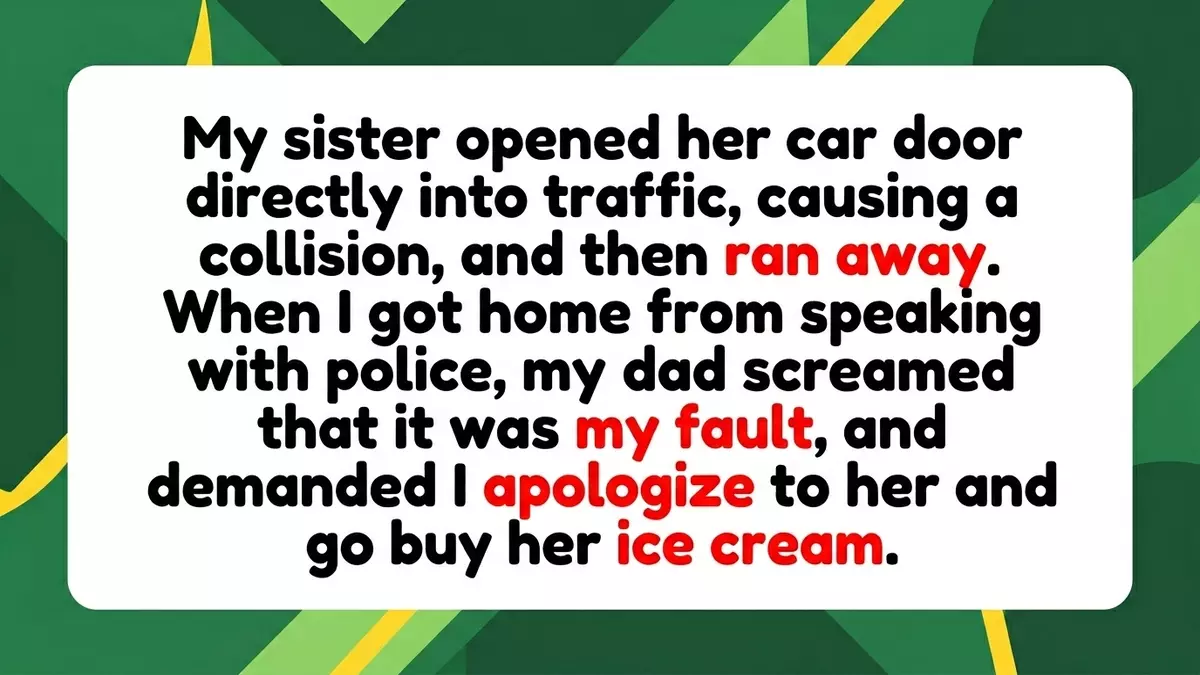
The conflict began during a routine trip home. The two siblings were traveling together in a taxi when it pulled up near their destination. Intent on exiting quickly, the 17-year-old sister opened her passenger door directly into the street-side lane of traffic.
Opening a car door into an active roadway is a severe safety hazard, and the results were instantaneous. An oncoming vehicle struck the open door, causing a significant traffic collision.
Instead of waiting for emergency services or assisting her sibling, the sister chose flight over responsibility. She panicked and ran away from the scene, leaving the 18-year-old behind to clean up the mess, speak with law enforcement, and coordinate with the shaken taxi driver.
Rewarding Reckless Behavior with Ice Cream
When the teenager finally made it home after dealing with the police, they expected their parents to be concerned about the legal and physical safety of both children. Instead, they walked into an unsettling alternate reality.
The parents had already comforted the younger sister. Rather than holding her accountable for causing an accident and fleeing the scene, the father turned on the 18-year-old. He claimed that the eldest sibling should have strictly monitored the sister and prevented her from opening the door.
To add insult to injury, the father demanded that the teenager apologize to the sister for the stress of the argument and go buy her ice cream to cheer her up. When the teenager fiercely fought back against this unfair demand, the father erupted in anger, accusing them of being cold, unsupportive, and cruel to their sibling.
The Psychology of Glass Children and Family Scapegoating
This explosive household argument highlights a highly destructive psychological phenomenon known as glass child syndrome, combined with systemic family scapegoating.
What is a "Glass Child"?
The term "glass child" refers to a neurotypical sibling of a child with special needs or a neurodivergent diagnosis, such as autism. These children are called "glass" because their parents often look right through them, focusing the entirety of their emotional energy, financial resources, and patience on the child who requires extra support.
| Role in the Family | Parental Expectations | Behavioral Accountability |
| The Glass Child (Eldest Teen) | High standards of maturity; expected to act as a third parent or supervisor. | Strictly enforced; blamed for household friction. |
| The Coddled Sibling (Neurodivergent) | Low or non-existent expectations; shielded from stress. | Completely bypassed; protected from natural consequences. |
When parents overcompensate for a neurodivergent child by lowering all behavioral standards, they often inadvertently place an unfair emotional and physical burden onto the neurotypical sibling. In this case, the older teenager was expected to possess omniscient supervisory powers during a sudden taxi exit, while the younger sister was treated as a helpless bystander in an accident she actively caused.
The Dynamics of Family Scapegoating
According to family systems theory, dysfunctional family units frequently designate a single member as the scapegoat. By funneling all household blame onto this one individual, the parents can effectively avoid addressing their own toxic enabling behaviors or marital stresses.
By forcing the older sibling to purchase treats for a sister who just caused a major automobile collision, the parents are actively enabling entitlement under the guise of disability accommodation. This creates deep-seated, permanent resentment between the siblings and fractures the entire family unit.
The Real-World Danger of Shielding Kids from Liability
While accommodating special needs is essential for a compassionate household, erasing all personal boundaries prepares the neurodivergent child for a harsh awakening in the real world.
The younger sister's autism does not inherently prevent her from learning basic spatial awareness and vehicular safety. By shielding her from the social, financial, and legal liabilities of causing a traffic accident, the parents are depriving her of crucial developmental milestones.